



Top 5 Common Mistakes in Wayfinding Signage (And How to Avoid Them)
- April 28th, 2026
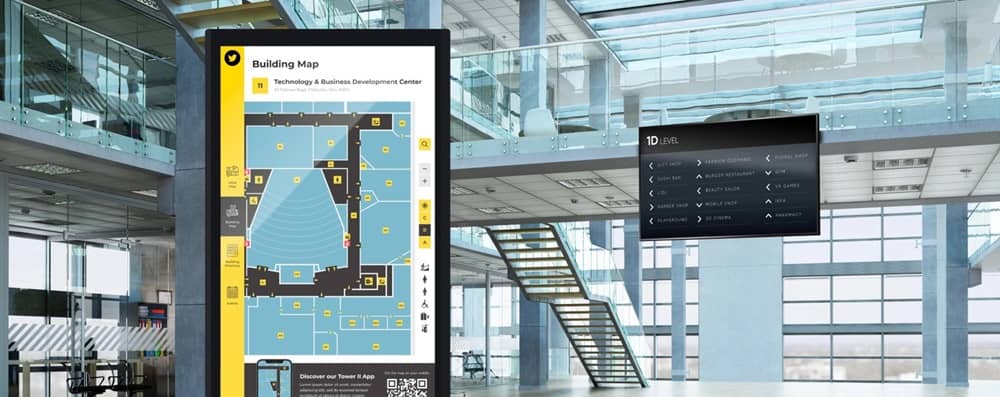
Have you ever walked into a large shopping centre, hospital, or office building and felt completely lost? You scan the walls, look up at the ceiling, spin around, and still can’t figure out where to go. That frustrating experience is almost always the result of poor wayfinding signage.
Good wayfinding signage does something remarkable: it makes navigation feel effortless. When it works well, people barely notice it. But when it fails, the consequences ripple outward, causing confusion, frustration, lost customers, and in high-stakes environments like hospitals, genuine safety risks.
Whether you’re managing a retail precinct, a corporate campus, a healthcare facility, or a public space, getting your wayfinding signage right matters more than most people realise. The good news is that most wayfinding mistakes are entirely avoidable. Here are the five most common ones, and exactly what you can do about them.
Mistake 1: Prioritising Aesthetics Over Clarity
This is perhaps the most common mistake, and it tends to come from a good place. Businesses want their signage to look on-brand, sleek, and visually impressive. The problem arises when design decisions are made in service of appearance rather than function.
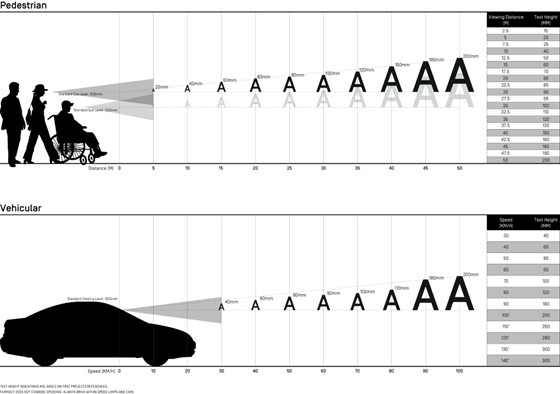
Think about ornate fonts with thin, decorative strokes that look beautiful in a branding deck but become nearly illegible at a distance of three metres. Or light grey text on a white background because it suits the colour palette of the building. Or signs positioned at eye level on a busy wall where they compete with everything else for attention.
Effective wayfinding signage needs to be readable before it is beautiful. That means choosing fonts with high legibility at distance, maintaining strong contrast between text and background, and giving signs enough visual breathing room to stand out from their surroundings.
The fix here is straightforward: always test your designs in context, not just on a screen. Print a mock-up at actual size, place it in the intended location, and view it from the distance and angle your visitors will encounter it. You might be surprised at how differently it reads in the real world compared to a design presentation.
Mistake 2: Inconsistent Sign Design Across a Space
Imagine walking through a building where the signs on the ground floor use one style, the signs on the second floor use a different colour scheme, and the carpark signs look like they came from an entirely different project. Even if each individual sign is well-designed, the lack of visual consistency destroys the system.
Wayfinding works because people learn to recognise it quickly. When your signs share the same colours, typography, iconography, and format, visitors develop trust in the system almost immediately. They spot a sign and know instinctively what kind of information it contains. Break that pattern and you break the trust.
This often happens in stages, when a wayfinding system is installed over time, or when different people or contractors are responsible for different areas. It can also happen during refurbishments when only part of a system is updated.
The solution is to build a clear signage style guide before anything goes to production. This document should define every visual element, including colours (with exact codes), approved typefaces, icon standards, sizes for each sign type, and placement rules. Every sign in your facility, now and in the future, should be measured against it.
The Swift Signs team works with clients to develop cohesive sign families from the ground up, ensuring consistency across every touchpoint in a space.
Mistake 3: Too Much Information on a Single Sign
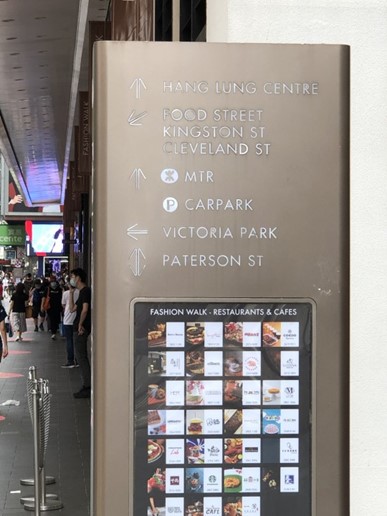
Less really is more in wayfinding. A sign that tries to direct visitors to seven different destinations at once is not helpful. It is overwhelming. When faced with too much information at a decision point, people slow down, second-guess themselves, and often make errors. In a busy environment, this creates bottlenecks and frustration.
The instinct to include as much information as possible on each sign comes from a reasonable place: nobody wants visitors to feel lost. But overloading a sign actually increases the chance of confusion rather than reducing it.
Good wayfinding design follows a simple principle: show people only what they need to know at the moment they need to know it. At the entrance, guide visitors toward the major zones. As they move deeper into the space, progressively reveal more specific destinations. This approach, sometimes called progressive disclosure, keeps each sign focused and easy to act on.
As a rule of thumb, try to limit directional signs to five destinations or fewer. If you find yourself needing more, it may be a sign (pun intended) that your overall wayfinding hierarchy needs to be rethought, not that you should squeeze more onto the panel.
Mistake 4: Poor Sign Placement
You can have a beautifully designed, perfectly consistent, clear and concise sign, and it will still fail completely if it is in the wrong location. Sign placement is arguably the most critical element of any wayfinding system, and it is consistently underestimated.
The most dangerous place for a sign to be missing or poorly placed is at decision points, those moments when a visitor reaches a corridor, an intersection, a lift lobby, or a stairwell and needs to choose a direction. These are exactly the moments where signage earns its keep. If the sign is positioned ten metres past the turn rather than just before it, people will have already made the wrong decision.
Height is another frequent issue. Signs mounted too high are missed by people who are looking at eye level. Signs positioned too low get obscured by crowds or furniture. The general standard is to mount directional signs at around 2.1 to 2.4 metres from the floor in pedestrian environments, though this varies depending on the context.
Lighting is also part of placement. A sign in a poorly lit corner, or one that gets washed out by direct sunlight at certain times of day, becomes effectively invisible. Always consider how the sign will appear under real conditions throughout the day.
The best approach is to conduct a pedestrian walkthrough of your space before finalising placement decisions. Walk the routes your visitors will take, note every decision point, and ask yourself what information a first-time visitor would need at exactly that moment.
If you’re planning a new signage installation, our custom signs team can assist with a site consultation to map out placement before production begins.
Mistake 5: Failing to Update Signs When Things Change
A wayfinding system is not a set-and-forget solution. Businesses evolve, spaces get reconfigured, tenants move, departments shift floors, and entrances change. When these changes happen without corresponding updates to the signage, the entire system starts to break down.
Outdated signs are worse than no signs in some situations. A sign pointing visitors confidently to a destination that has moved will actively send them in the wrong direction. Repeated experiences like this erode trust in the whole system, and visitors stop relying on the signs at all.
This is a particularly common issue in:
- Healthcare facilities where departments relocate regularly
- Shopping centres with high tenant turnover
- Corporate offices undergoing growth or restructuring
- Universities and educational campuses across multiple buildings
The fix is to treat your wayfinding signage as a living system. Build sign reviews into your facility management calendar, at minimum annually, and any time a significant change to the space is planned. Make sure someone is responsible for flagging when updates are needed and has the authority to act on them.
Partnering with a local signage supplier who can turn around updates quickly makes this much easier to manage. If you’re based in Australia and need fast, reliable sign updates, you can get in touch with our team to discuss ongoing maintenance arrangements.
Getting Wayfinding Right From the Start
Wayfinding signage that genuinely works is not the result of luck. It comes from deliberate planning, consistent execution, and a commitment to reviewing and improving the system over time. Avoiding the five mistakes outlined here, prioritising aesthetics over clarity, inconsistency, information overload, poor placement, and failing to update, will put you well ahead of most.
Every visitor who walks into your space deserves to navigate it with confidence. When they do, they have a better experience, they trust your organisation more, and they are far more likely to return.
At Swift Signs, we specialise in designing and producing wayfinding and building signage that balances clear communication with professional design. Whether you are starting from scratch or looking to overhaul an existing system, our team is here to help you get it right.
Ready to create a wayfinding system that actually works? Contact us today for a consultation and let’s build something your visitors will thank you for.